
Why Cold & Flu Season Triggers Pelvic Floor Symptoms — and What You Can Do About It

Published February 2026
Summary: Cold and flu illnesses increase internal pressure through coughing, sneezing, and vomiting. When illness disrupts pelvic floor reflexes, leaks, heaviness, and pressure can appear.
Why Cold & Flu Season Triggers Pelvic Floor Symptoms — and What You Can Do About It
Have you ever caught a cold and suddenly thought, “Wait… why is this happening too?” Leaking. Pressure. A heavy, uncomfortable feeling in your low back/pelvis that shows up just when you didn’t think you could feel more miserable.

You’re not imagining it – and you’re definitely not alone. When you cough, sneeze, or vomit, it’s like your pelvic floor is getting hit with a sudden stress test it did not sign up for. Pelvic floor issues have a knack for showing up at the worst possible times, and cold and flu season is prime time for them to make an appearance.

In fact, it’s often when women are sick that they start to connect the dots, which is why cold and flu season is when so many women find Tighten Your Tinkler and decide to get to the root of the problem.
Seasonal illnesses create a perfect storm that seriously challenge our pelvic floor. In this article, we’ll break down:
- Why this happens
- What you can do to calm symptoms when you’re sick
- Three immune-support tools our own families use to shorten (or sometimes avoid) illness
We’ve also put together a one-page cheat sheet with our go-to immune-support supplements and trusted sources, which you'll find below.
Let’s dig in.
How Coughing, Sneezing, and Illness Increase Pelvic Floor Pressure
1. Sneezing: the sudden pressure spike
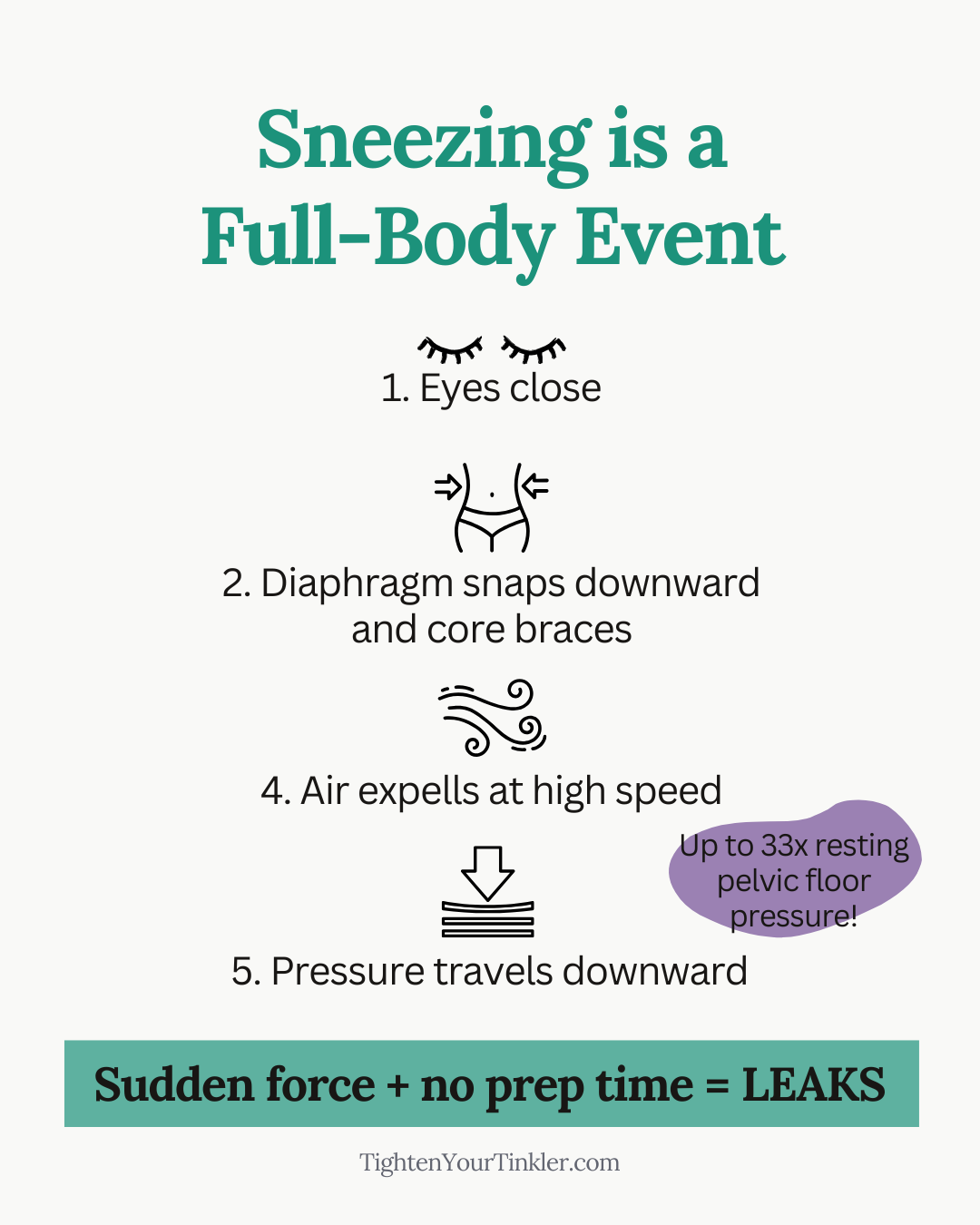
A sneeze isn’t just a cute little achoo. It’s a full-body event.
- Your diaphragm snaps downward
- Your abs and deep core fire
- Air is expelled at high speed
And then physics enters the chat.
Newton’s Third Law tells us that for every action, there’s an equal and opposite reaction. All that force has to go somewhere; when it can’t go up or out fast enough, it travels downward toward the pelvic floor.
Fun (and alarming) fact: a sneeze can create up to 33 times more pressure than your pelvic floor experiences at rest.
That’s why “sneeze leaks” are common and often happen first. Understanding the biomechanics at play is the first step toward changing how your body responds.
2. Coughing: the repeated pressure overload
Unlike sneezing, which is sudden and sporadic, coughing is:
- Repetitive
- Intense
- Ongoing – sometimes for days on end

Each cough sends a strong downward force through your core. Expelled air during a cough can reach up to 500 mph! That repeated pressure adds up fast, fatiguing the pelvic floor much like doing too many reps without rest.
As those muscles tire, their reflexive timing slows – and that’s when symptoms start to show up. You might notice urinary or fecal leaks, a growing sense of heaviness, or feelings of pressure in your pelvis.
3. And yes… vomiting can trigger symptoms, too.
Vomiting is a high-pressure event that’s often overlooked. Even though the force appears to move upward, the internal mechanics tell a different story. During vomiting, the diaphragm forcefully contracts downward while the abdominal muscles generate intense, involuntary bracing to evacuate the stomach.

That coordinated contraction creates a rapid spike in intra-abdominal pressure – and, just like with coughing or sneezing, that pressure has to be managed. The pelvic floor becomes the load-bearing structure.
When vomiting is ongoing (think stomach flu, food poisoning, or morning sickness), that repeated pressure can quickly fatigue the pelvic floor. As endurance and reflexive timing decline, symptoms like leaking and a heavy, dragging pelvic sensation become more likely.
It’s physics - and biomechanics.

A healthy pelvic floor contracts automatically just before a sneeze or cough. This is a reflex, not something you consciously do.
When you’re inflamed, exhausted, feverish, dehydrated, or coughing constantly (and combine that with any amount of pelvic floor injury or weakness), that reflex doesn’t fire as efficiently. Even a split-second delay is enough to cause leaking or pressure.
Is it “normal?” No. But it’s very, very common, especially because most women (1 in 3) already have some type of pelvic floor dysfunction: hypertonicity, prolapse, diastasis recti, incontinence.
Want to support your body while you heal?

We created a simple, one-page guide with our trusted immune-support supplements (including what we actually use with our own families) plus access to our Fullscript store where we share discounts.
👉 Get the Cold & Flu Support Guide
How to Support Your Pelvic Floor When You’re Sick
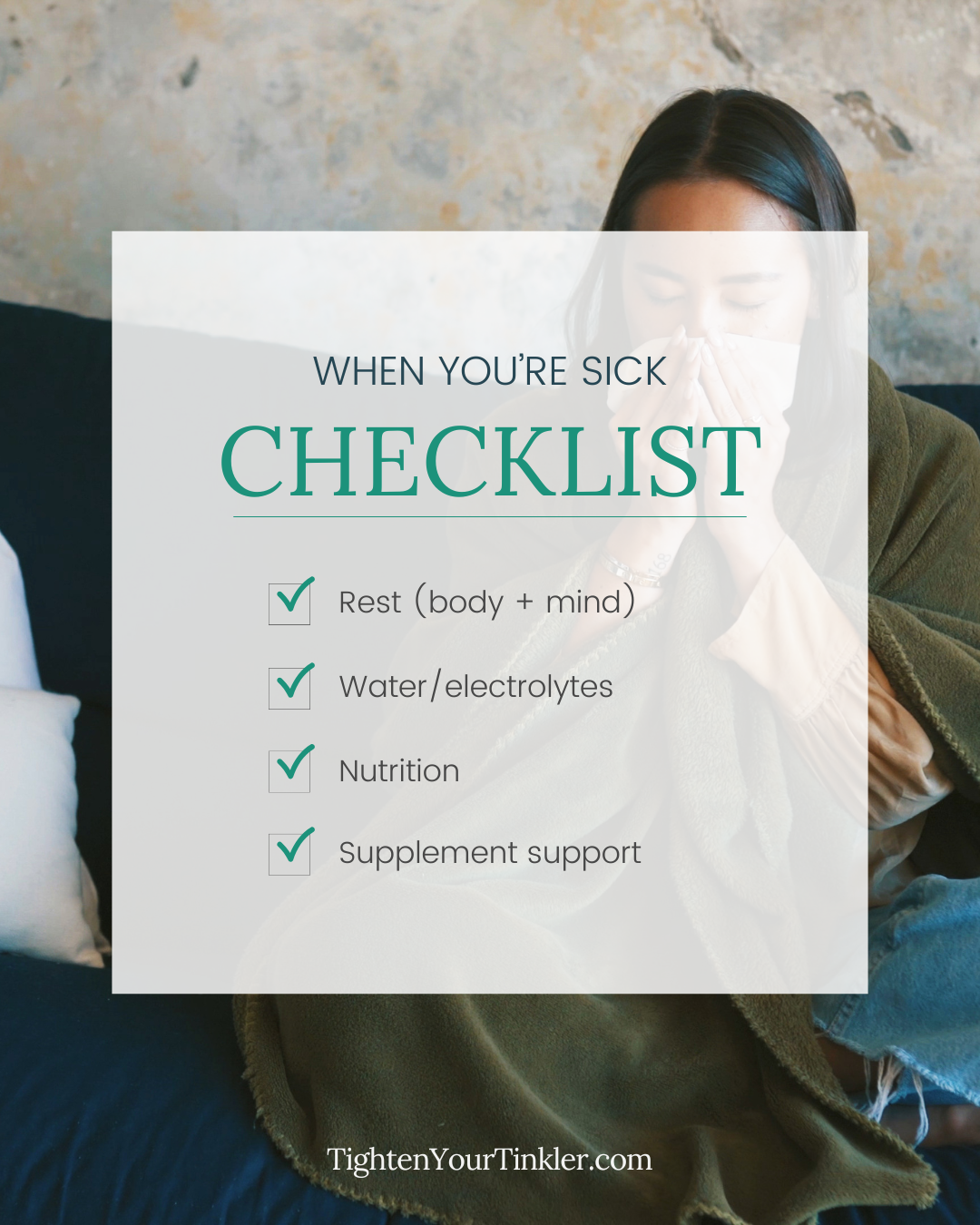
The best way to support your pelvic floor when you’re sick is to focus on getting better: lots of rest, proper hydration (with electrolytes), solid nutrition, and smart supplementation.
We’ve put our go-to immunity protocol into a simple one-page guide — including supplement recommendations, dosing notes, and direct access to our Fullscript store so you don’t have to hunt things down while sick.
👉 Download the Cold & Flu Support Guide
If you’re a member of our Signature Program, we encourage you to continue whichever elements feel realistic and most helpful: dial back the Daily Warm-up to just include the Standing Exercises (about 6 minutes), spend some of your rest time in either of the Decompression positions, and incorporate breath work if it doesn’t exacerbate any coughing.
Maintaining these practices will help your body to better manage the pressure imbalances (and hopefully offer some immediate relief). Once you’re well, you’ll be able to jump back into the full Signature Program with renewed motivation and focus.
Three Holistic Tools We Use to Prevent or Shorten Cold & Flu Symptoms

1. Onion Honey Syrup
This one is a staple in our homes: we make it as soon as someone starts coughing.
Why it works:
- Soothes irritated airways
- Supports lymphatic drainage
- Helps break up mucus
- Offers natural antimicrobial properties
How to make it:
- Slice half a medium onion.
- Layer into a pint mason jar with raw honey (local if possible).
- Let sit several hours (preferably overnight) on the counter until the honey thins. You can start using it at this point, but it’ll continue to gain potency. Take two spoonfuls in the morning and evening.
- After 48 hours, strain the onions out and refrigerate. It should last for several weeks to one month.
2. Onion Socks

This one sounds strange, but it’s a long-standing home remedy for congestion and fevers. Use this tip overnight at the beginning of illness or seasonal allergies.
How to use it:
- Slice an onion and put in a plastic grocery bag.
- Slide your foot into the bag so the bottom of your foot is in contact with the onion Tie the handles around your ankle.
- Layer a large sock over the bag.
Your feet will smell a little funky (they're in direct contact with onions!), so plan for a shower the next morning.
3. Congaplex (Standard Process)
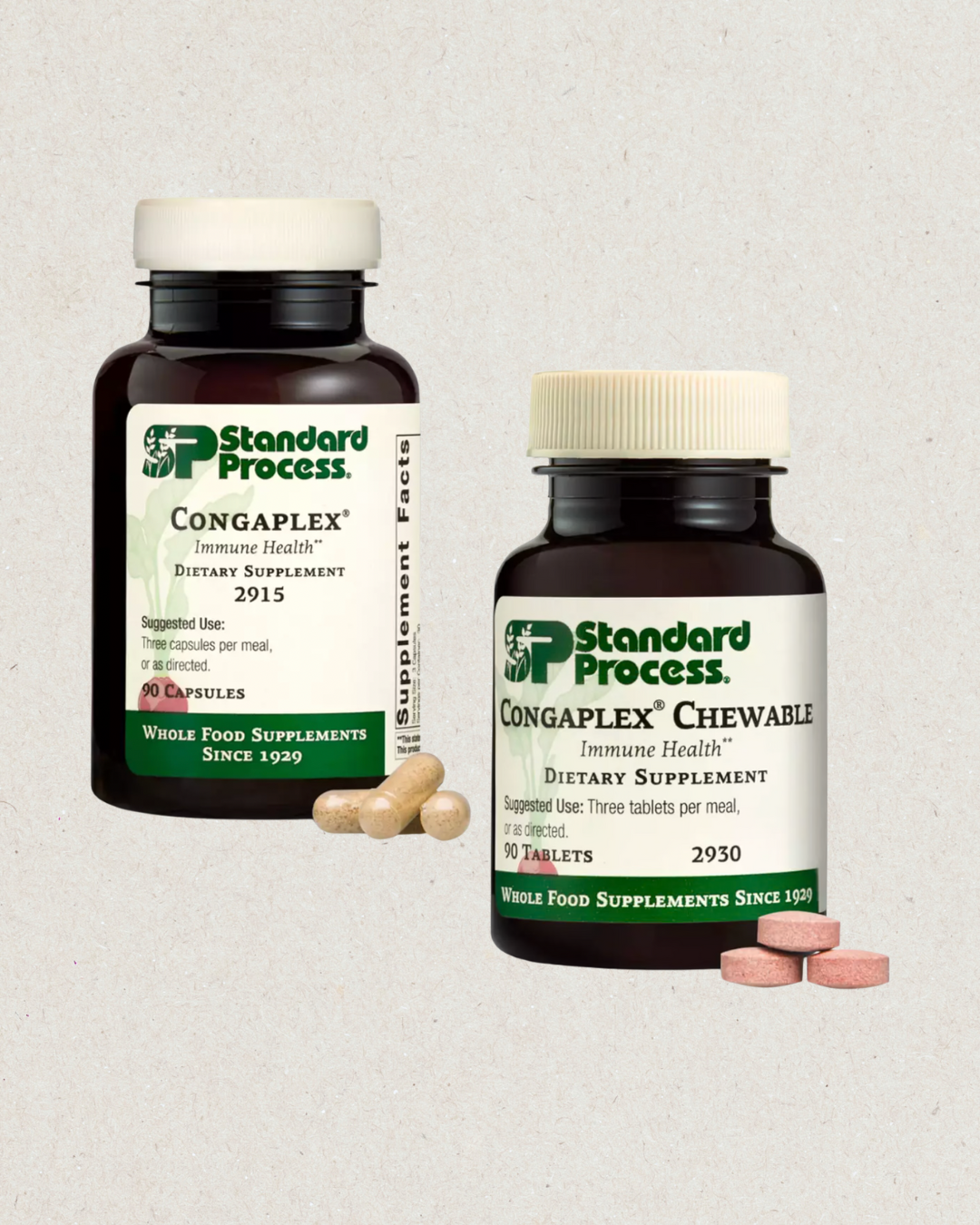
This is our powerhouse go-to for immune support, for both prevention and managing active illness.
Why we like it:
- Supports the immune response
- Helps shorten symptom duration
- Gentle yet effective
Where to get it:
Standard Process supplements only available via practitioner. Yes, you can sometimes find them on Amazon… but:
- They’re typically more expensive
- Quality control is inconsistent
- Storage/shipping conditions are unknown
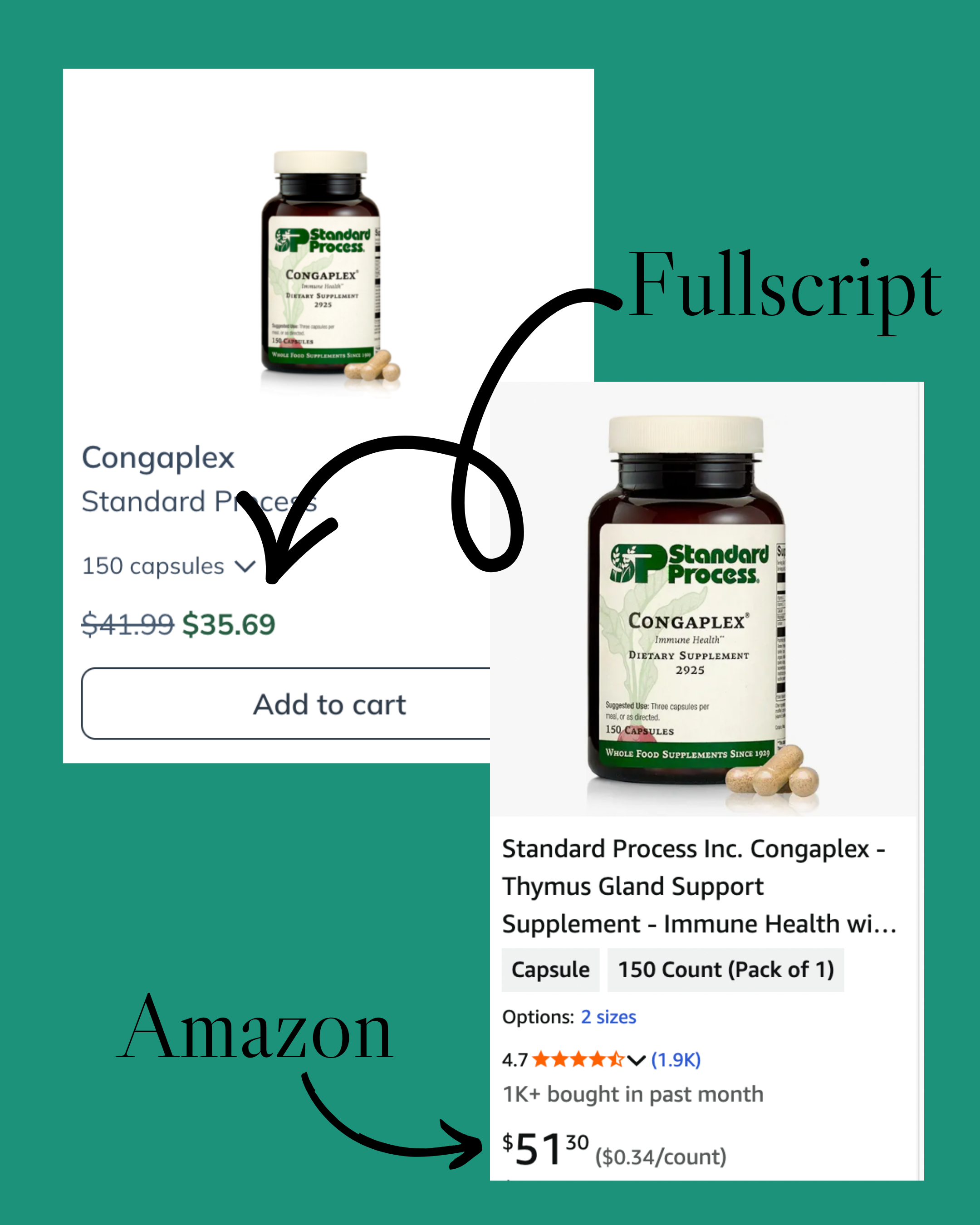
We personally order through Fullscript, where Congaplex is:
- usually less than $35 (vs. $50+ on Amazon, though prices fluctuate there)
- eligible for free shipping over $50
- easy to bundle with vitamins or other supplements you’re already taking
Want the full list of what we keep on hand during cold and flu season — plus easy access to our Fullscript store?
👉 Get the full Cold & Flu Supplement Guide here
Key Takeaway
Cold and flu symptoms increase internal pressure through coughing, sneezing, and vomiting. When illness, fatigue, and dehydration disrupt pelvic floor reflexes, and combine with any amount of already-existing pelvic floor weakness, leaks, heaviness, and pressure can appear. These flare-ups reflect temporary overload, not failure, and can improve with rest, hydration, and targeted immune support.
Frequently Asked Questions
Is it normal for pelvic floor symptoms to flare up when I’m sick?
Yes. Coughing, sneezing, and vomiting create sudden increases in internal pressure that can stress the pelvic floor, especially during illness. You may notice leaking, heaviness, or back/hip discomfort.
Does this mean my pelvic floor is weak or getting worse?
These flare-ups usually reflect temporary overload or delayed reflex timing, combined with some pre-existing underlying weakness.
Why does coughing cause more leaks than a single sneeze?
Coughing creates repeated pressure with little recovery time. Over hours or days, this cumulative load can greatly fatigue pelvic floor muscles and reflexes.
Should I stop pelvic floor exercises when I’m sick?
Often, yes – or scale back. Signature Program members should continue the Standing Exercises if able to do so. During illness, rest, hydration, and gentle decompression are usually more supportive than strengthening work.
What can I do to reduce pelvic floor symptoms while I’m sick?
Focus on rest, hydration (including electrolytes), nutrition, and immune support to shorten illness duration and reduce pressure on the pelvic floor.
Final Thoughts: Be Kind to Yourself
Inside the Signature Program, we call illness the “trickiest trigger” and for good reason: you can’t always avoid it, and it can feel incredibly discouraging to deal with pelvic floor symptoms flaring up, on top of being sick.
But here’s what’s true:
You’re not starting over.
Your body hasn’t forgotten its progress.
And these flare-ups do not erase your hard work.
Your pelvic floor is simply responding to a temporary increase in pressure and inflammation.
Give yourself grace. Use the tools you have. Support your immunity with rest, hydration, and nutrients.
And remember: healing still counts, even on the days you’re under a blanket with tissues and tea.
If you’re reading this sick, tired, or frustrated, let us make one thing easier:

👉 Download our one-page Cold & Flu Support Guide
Rest and hydrate as you can.
You’ve got this – and we’re here to help.
Where to go next:
Free Pelvic Floor Quiz ↗
Kegel-Free Signature ProgramHypertonicity Blog Post ↗
Meet Tighten Your Tinkler®️
Together, Jenn Lormand (Exercise Physiologist) and Christina Walsh (Physical Therapist) have 36+ years of experience helping women heal their pelvic floors and reclaim their quality of life.
Their research-backed protocol uses whole-body movement to restore strength and function, without a kegel or Bluetooth-enabled internal device in sight. They’re here to share the information women need to make informed, confident decisions for their pelvic health.

Decompress your back, hips, pelvic floor (and nervous system) in just 5 minutes!
✔ No special equipment needed
✔ Free, simple, at-home position for instant relief
We hate SPAM. We will never sell your information, for any reason.
